
[Stay on top of transportation news: Get TTNews in your inbox.]
Hormuz shipping traffic picks up despite hostilities
Shipowners monitor strait, Red Sea routes in shifting environment
 The Al Areesh (in white) sailed into the Gulf of Oman from the Strait of Hormuz early July 30, while the CYH Yongchun sailed in the opposite direction. (Bloomberg)
Key Takeaways:
- Shipping through the Strait of Hormuz increased in recent days, with 14 commodity vessels crossing July 29 and Qatar sending its first LNG cargo in three weeks.
- The rebound follows a mid-July decline after escalating U.S.-Iran hostilities, while U.S. officials said military escorts helped maintain oil flows from the Persian Gulf.
- Maritime activity through Hormuz and the Red Sea remains closely watched as traders and shipowners assess security risks and vessel movements amid ongoing attacks.
Shipping across the crucial Strait of Hormuz has picked up in recent days despite a continuation of hostilities in the Middle East, with the U.S. claiming its navy escorted some tankers across the waterway.
The Al Areesh openly exited the Persian Gulf early July 30 carrying a liquefied natural gas cargo from Qatar, the country’s first shipment in three weeks, while the liquefied petroleum gas carrier CYH Yongchun appeared to transit the strait with its transponder off, according to ship-tracking data.
Fourteen commodity vessels crossed Hormuz in both directions on July 29, data from market intelligence firm Kpler shows, up from single digits last week. The figures may still be revised with new information. A crude supertanker has also been provisionally booked at nearly $500,000 per day to collect a cargo at an unnamed Persian Gulf port next week for delivery to China.
Shipowners and traders have zeroed in on maritime activity through Hormuz and the Bab el-Mandeb strait in the Red Sea for signs of how vessels are navigating a constantly changing security environment. Traffic through these waterways has ebbed and flowed with each wave of attacks, including on tankers.
Traffic through Hormuz dwindled after the U.S. intensified its strikes on Iran in mid-July, which was met by retaliatory attacks by Tehran on countries including Kuwait. Hostilities resumed this week after a brief pause, but Energy Secretary Chris Wright said oil has continued to flow with U.S. military support.
Image
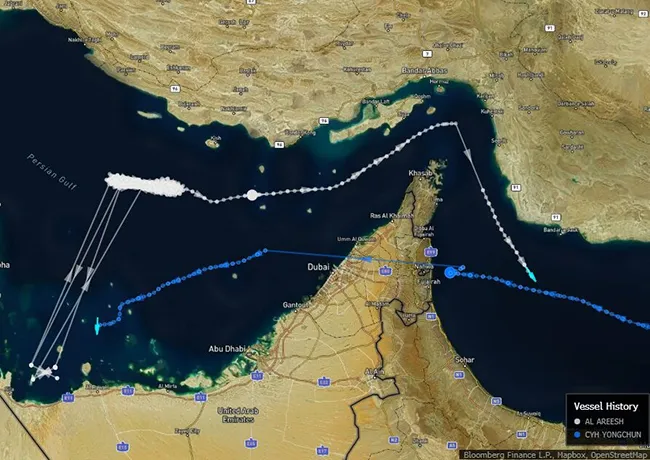
The Al Areesh (in white) sailed into the Gulf of Oman from the Strait of Hormuz early July 30, while the CYH Yongchun sailed in the opposite direction. (Bloomberg)
“We are using the United States military to escort out oil and gas out of the Strait of Hormuz,” he told Bloomberg Radio, saying about 6.5 million barrels of oil a day exited the gulf via the strait over the past week. “We are restoring supplies of global oil and refined products to the world out of that region.”
In the Red Sea, some tankers were seen entering the Gulf of Aden, signaling their intention to call at the Saudi Arabian port of Yanbu, despite the threat of attack from Iran-backed Houthi militants. Some Asian buyers appear to be picking up cargoes at Egypt’s Mediterranean port of Sidi Kerir, where Saudi Arabia is known to export its crude.


